
Built by experts, backed by experts
Our consultants will help you set up your system including building your HACCP, risk assessments and safety policies.
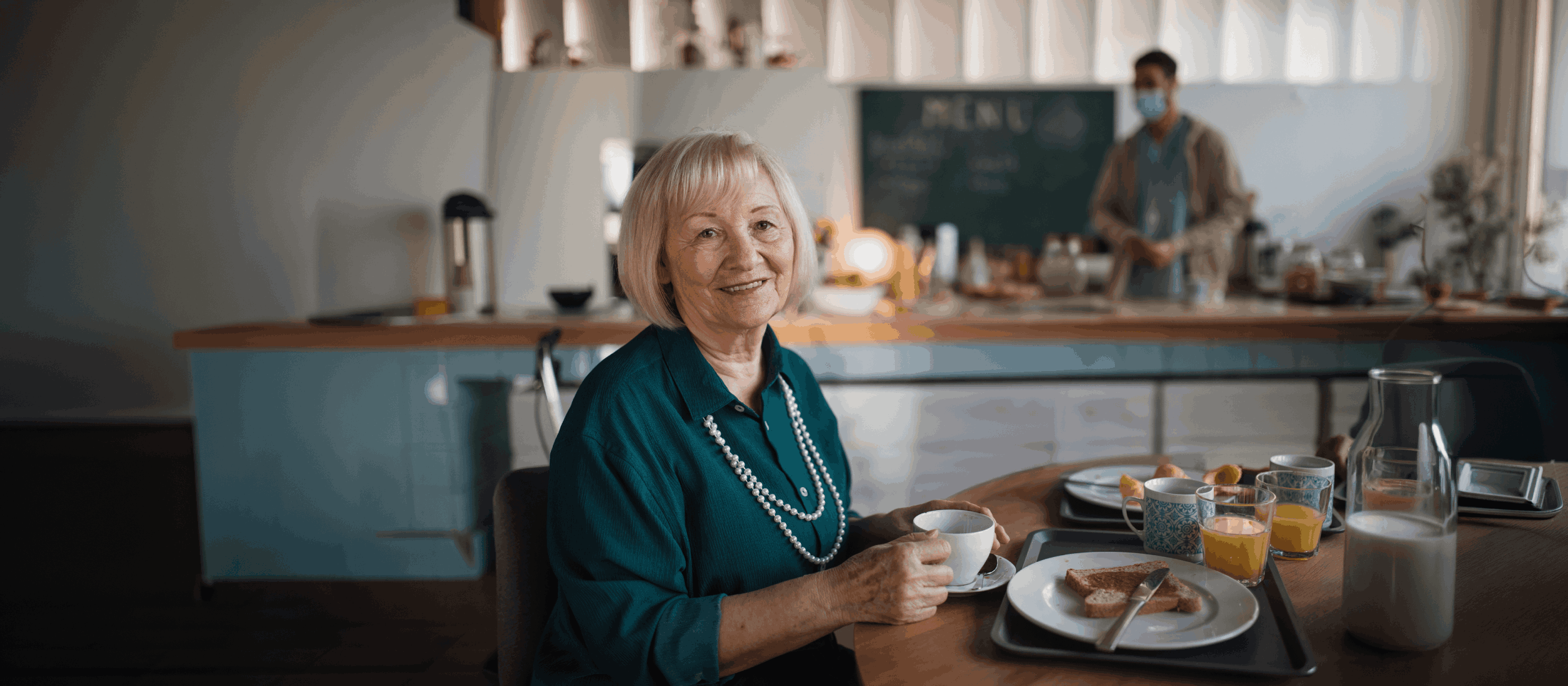
Keep standards high, protect residents, and stay ready for every inspection.


The families of your residents trust you to serve meals that are safe, nutritious and prepared with care. And regulators (through the Food Safety Act 1990, the Food Standards Act 1999, and allergen legislation,) need to see the paperwork that backs that up.
That’s where we come in.
Food Alert takes the complexity out of food safety compliance, giving your team simple, clear processes to follow and keeping all the evidence you need right at your fingertips.
As well as Environmental Health Officer visits under the Food Hygiene Rating Scheme, you’re also accountable to the Care Quality Commission (CQC) and the Food Standards Agency (FSA), so getting food safety right really matters.
Our Alert65 compliance software makes it easy to stay on top of it all. Your team gets simple, day-to-day processes to follow, and you get a clear, centralised record of everything, so when an inspector does come knocking, you’re ready.
Our Compliance Membership gives your care home complete Food Safety and Health & Safety cover, day in, day out.
Our consultants will help you set up your system including building your HACCP, risk assessments and safety policies.
Run your day-to-day operations with modules that oversee checklists, audits, training and more.
You’re never on your own. Expert support is available 24/7 with our dedicated advice line.
Recognised and accredited by
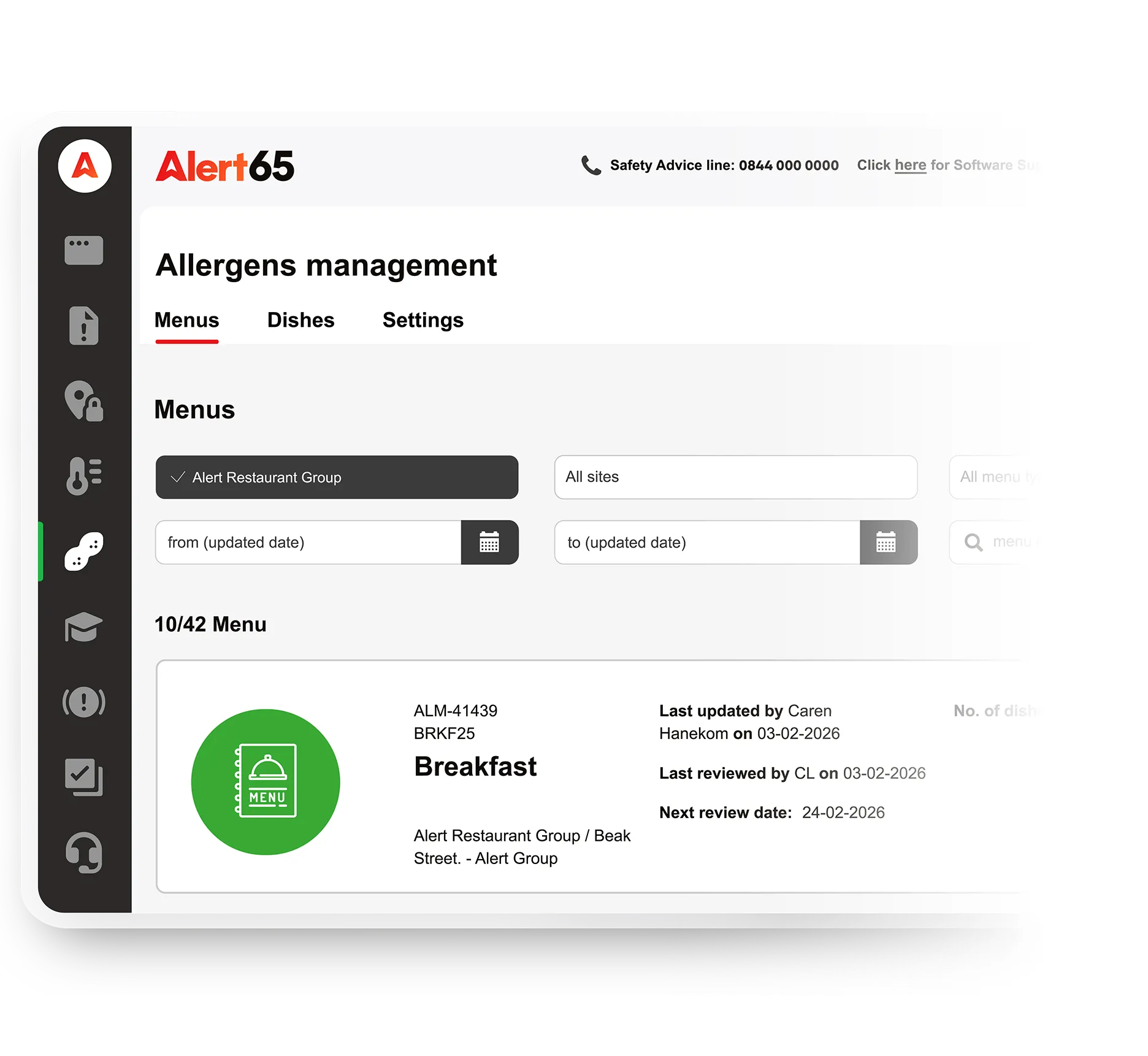
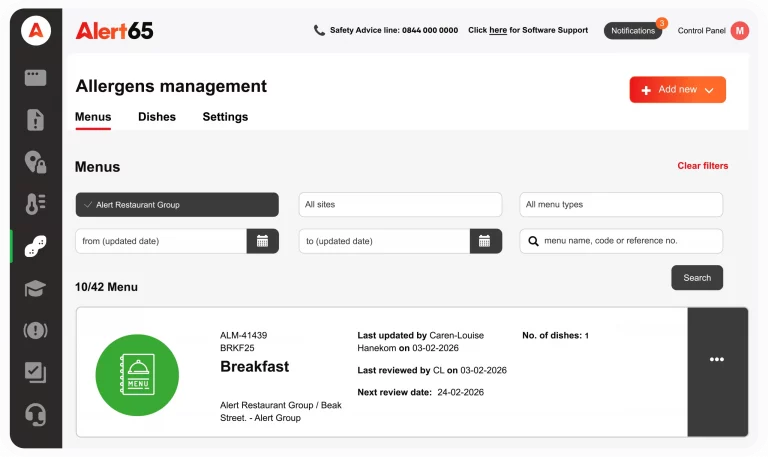
Create and update your allergen matrix in minutes. This module helps care homes stay compliant, safeguard residents with allergies, and give inspectors confidence during every inspection.
Give your team the knowledge and confidence to handle food safety and Health & Safety challenges, without taking them off-site. Our expert-led webinar training turns complex compliance topics into clear, practical skills, keeping your people informed, empowered, and ready for inspection.
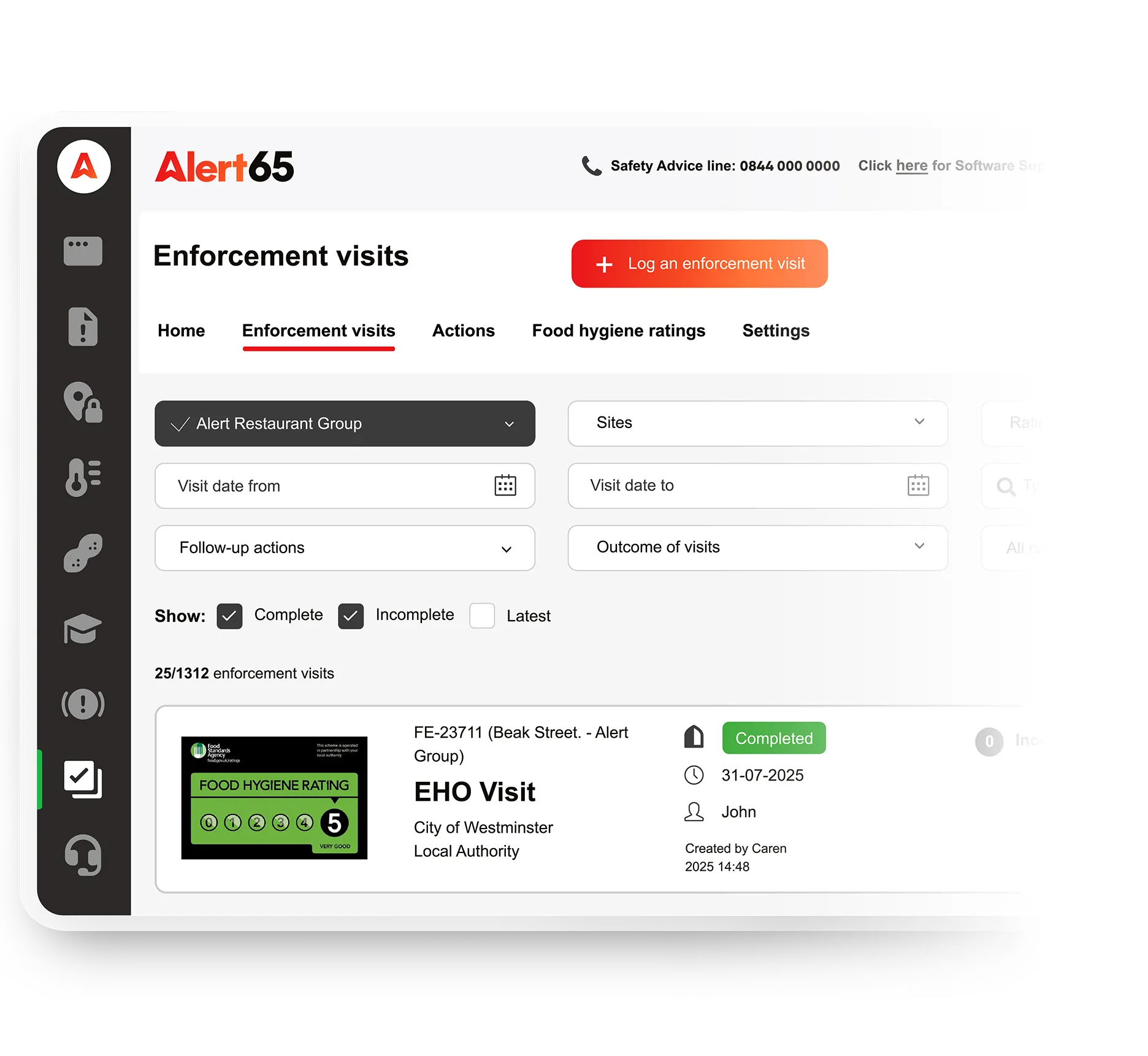
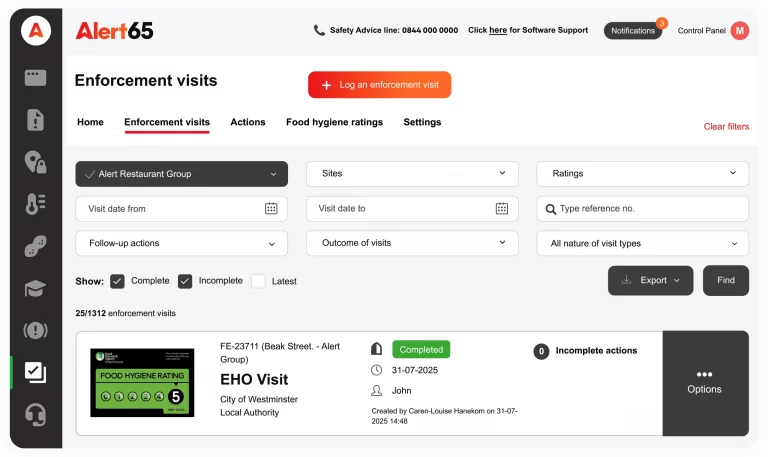
Manage everything in one place with Alert65. Store documentation, complete digital checklists, monitor compliance across multiple sites, and stay prepared for EHO and CQC inspections—all while gaining clear visibility, greater control, and ultimate peace of mind.
In care, there’s no such thing as out of hours. Our 24/7 expert advice line means you always have a qualified food safety or Health & Safety specialist on hand, day or night.
Know exactly where you stand before an inspector does. Our qualified Environmental Health Practitioners deliver thorough food safety audits with a detailed report and clear action points.


From day one, you’ll have a single point of contact who knows your sites, your team, and your compliance history. They will stay and grow with you as your business evolves.
CQC and EHO inspections can happen without warning, so we help you maintain the kind of robust, well-documented compliance that means you’re ready for anything.
Alert65 brings all your Food Safety and Health & Safety compliance together in one place, giving you real-time visibility, digital records, and the confidence that everything is in order.
Since 1990, we’ve helped thousands of businesses navigate complex Food Safety and Health & Safety legislation, and we bring that depth of expertise to every care home we work with.
From day one, your dedicated onboarding manager will schedule your setup meeting, agree key dates, and tailor everything to your care setting, so you know exactly what’s happening and when.

We configure Alert65 and Check65 around your operation, digitising your Hazard Analysis and Critical Control Point (HACCP), policies, risk assessments, and activating all the modules your care home needs.
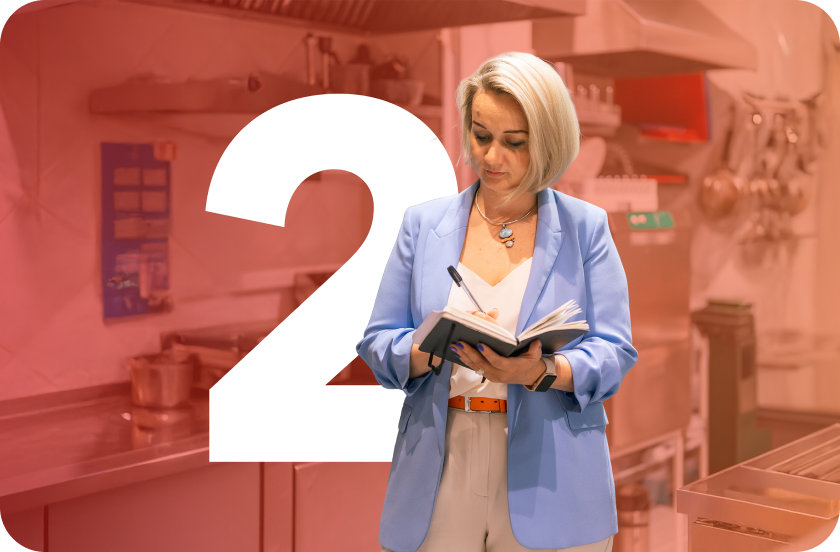
No one is left to figure things out alone. We provide hands-on training for senior managers so they can get the most out of Alert65 from day one — and your appointed consultant stays closely involved throughout.
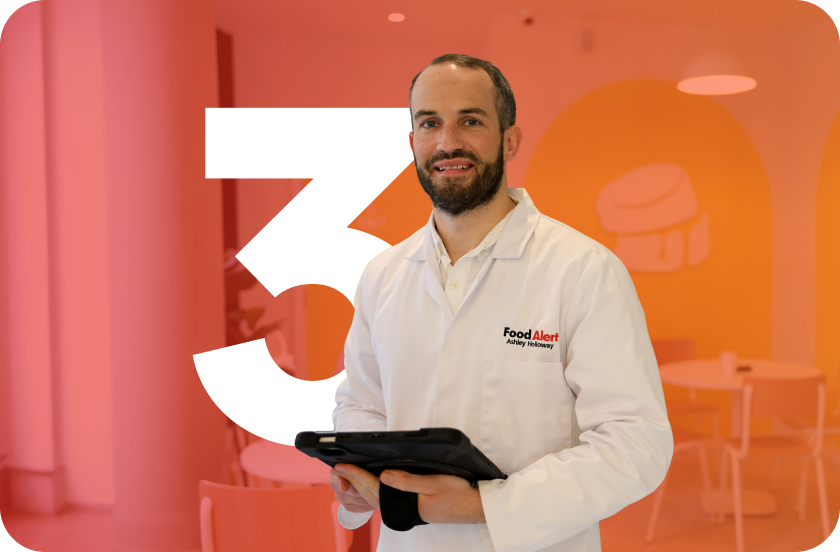

Food Alert’s consultants make it make sense – they’re friendly, professional and extremely knowledgeable
Following the success with Audit65, we efficiently integrated all our 52 sites onto the Alert65 platform, consolidating all compliance and audit processes under one digital roof with remarkable success. The setup process was straightforward and stress-free, with the Food Alert team providing support at every stage.
For me Alert65 ticks all the boxes, I can access live dashboards and data and download reports in an instant. All our documentation, from training to accident reporting and complaint handling, are centralised, making the process of managing them so much easier.
Say goodbye to paper trails. Check65 keeps your team on schedule with digital checklists, instant issue flagging and smart reporting dashboards.
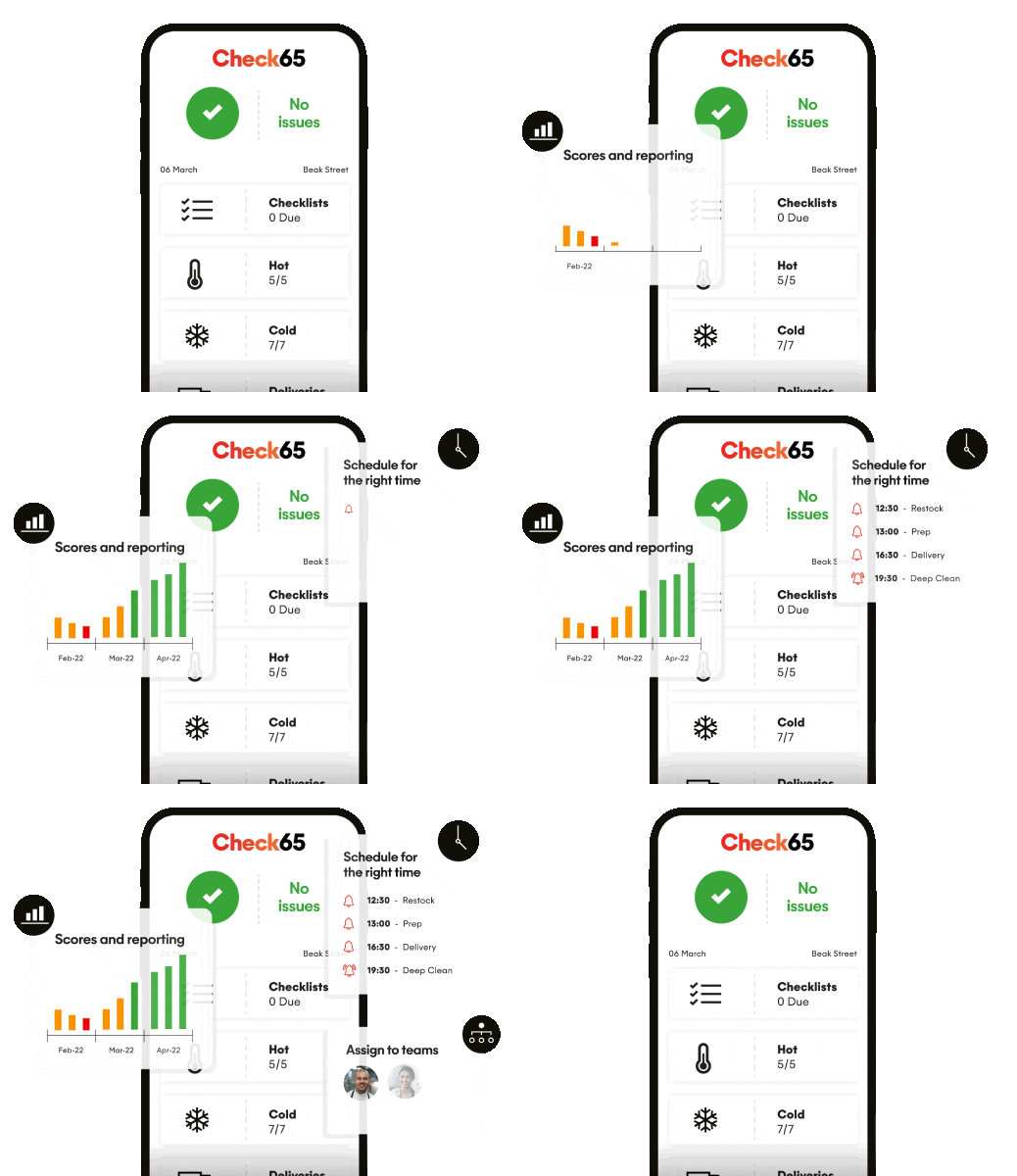
Save valuable time and money
Our food safety consultants visit your site to carry out thorough, practical assessments of your food hygiene and Health & Safety standards, benchmarking everything against current legislation and best practice. We provide a detailed report with clear, prioritised recommendations and are on hand to help you work through every action. We also offer ongoing compliance membership that includes guidance ahead of both EHO and CQC inspections, so you’re always prepared.
Care home residents are often among the most vulnerable people in our communities. Many are elderly or living with conditions that make them far more susceptible to foodborne illness, where the consequences can be serious or even life-threatening. That’s why the standard of food hygiene in care homes is not just a regulatory matter; it’s a fundamental part of resident welfare. Poor food hygiene practices can lead to illness outbreaks, reputational damage, enforcement action, and CQC concerns. Getting it consistently right is one of the most important things a care home can do.
Yes. Care home kitchens are regularly inspected by Environmental Health Officers (EHOs) from the local authority, who assess compliance with food safety legislation and award a Food Hygiene Rating under the national Food Hygiene Rating Scheme (FHRS). Inspections can happen unannounced, which is why having your compliance records and processes in great shape at all times matters so much. Care homes are also subject to oversight from the Care Quality Commission, which considers food safety and resident nutrition as part of its wider inspection framework.
In practice, yes. Whether you operate a residential care home or a nursing home, the same food safety legislation applies, including the Food Safety Act 1990 and the food hygiene regulations. Both types of setting are inspected by EHOs under the Food Hygiene Rating Scheme and fall within the scope of CQC oversight. The key difference is that nursing homes provide a higher level of clinical care, which may bring additional dietary and nutritional considerations for residents, but the underlying food safety and hygiene requirements are consistent across both.