Updated on September 8, 2026
Food Safety
9 min read
Why do allergen incidents still happen in well-run restaurants?

Most allergen near-misses happen at establishments that already have compliant, documented procedures in place, not at sites where training or process is missing. The root cause is usually a momentary lapse of concentration or “autopilot” behaviour during a busy service, rather than a gap in policy.
This matters because the problem is growing, not shrinking. A national analysis of NHS hospital admissions data published in The British Medical Journal found that food-induced anaphylaxis admissions in the UK rose from 1.23 to 4.04 per 100,000 people between 1998 and 2018, an average annual increase of 5.7%, with the steepest rise among children under 15. Given that trend, zero allergen risk isn’t a realistic operational target. The aim has to be minimising error and catching it before it reaches a guest, not eliminating it altogether.
This article looks at why near-misses happen even in trained, audited kitchens, what role staff turnover plays, what a real incident can teach the wider sector, and what restaurant leaders can do differently starting this week.
Key takeaways
- Do allergen incidents only happen at poorly run sites? They happen at sites with competent, trained teams and compliant paperwork too.
- What’s the main cause? Autopilot behaviour and fatigue under service pressure, combined with staff turnover disrupting the balance of experience on a team. Neither is a sign of incompetence; they can affect even the most capable staff member.
- Is zero allergen risk achievable? The realistic goal is minimising and catching error, not eliminating risk entirely.
- What reduces risk most? Leadership culture and accountability, more than additional paperwork.
Why do allergen near-misses happen even when procedures are fully compliant?
Allergen near-misses happen at sites with documented, up-to-date training already in place. That’s the uncomfortable part of this problem for anyone who assumes a strong audit result means the risk is under control. A good audit assesses far more than paperwork, as it looks at staff knowledge and how that knowledge is actually applied in practice. But it’s still a snapshot in time. What an auditor sees on the day isn’t necessarily what happens on a fully booked evening, when the same team is under a completely different level of pressure.
The mechanism behind most of these incidents is a momentary lapse of concentration during high-pressure service, not an absent or poorly understood process. Staff who can recite the 14 declared allergens without hesitation still miss a step when six tickets come in at once and the pass is backing up.
That leaves a genuine question for any operator who has already invested in training: if the knowledge is there, why does the mistake still happen? The answer sits in a specific behaviour pattern.
What is “autopilot” behaviour and why does it cause allergen mistakes?
Autopilot behaviour is performing a familiar task from habit rather than active attention, and it shows up most often during repetitive, high-cover shifts. A chef who has plated the same dish two hundred times that week may not be thinking through the allergen check step by step; their hands are moving faster than their conscious attention.
This is the exact moment a genuine allergen check gets skipped, without anyone deciding to skip it. It isn’t negligence, and it usually isn’t a training gap either. The staff member could pass a written test on the allergen procedures immediately afterwards and still not be able to explain why they missed the step in the moment.
This also runs counter to an assumption a lot of operators make, which is that experience is protective. In practice, experienced staff are often more prone to autopilot than nervous new starters, because familiarity is exactly what breeds automatic behaviour. The newer team member is still checking consciously. The ten-year veteran has stopped needing to.
Does staff turnover increase allergen risk?
Yes. High staff turnover keeps refilling the pool of team members who haven’t yet built the situational awareness that offsets autopilot risk.
CIPD labour market analysis puts UK hospitality turnover at around 52%, well above the wider UK average, and turnover at that rate has been a persistent feature of the sector rather than a one-year spike.
As people cycle through a team at that rate, the same lapses tend to recur, not because the same individual makes the mistake twice, but because someone new is always somewhere on that learning curve.
Is zero allergen risk realistic for a restaurant?
The short answer is no, unfortunately. The operational goal should be managing exposure, not eliminating risk.
That reframe matters because the direction of travel is upward, not flat. The BMJ analysis referenced above recorded 101,891 UK hospital admissions for anaphylaxis between 1998 and 2018, of which just over 30,000 were food-triggered, and the rate of food-induced anaphylaxis admissions more than tripled over that period.
Treating zero incidents as the KPI, against that backdrop, sets a restaurant up to fail rather than to improve. A more useful measure is how quickly a near-miss is caught, reported, and acted on.
How does leadership culture reduce allergen risk more than extra checklists?
Leadership tone-setting and day-to-day culture outperform additional paperwork or policy layers. A restaurant can add another sign-off sheet without changing what happens on the pass at 8pm on a Saturday.
What this looks like operationally is a manager who models an allergen check live during service, standing next to a chef and talking through the check in real time, rather than only reviewing a signed form the next morning. That single behaviour teaches a team more about what matters than a laminated poster ever will. Culture is also what determines whether trained knowledge actually gets used in practice.
How should restaurants build allergen accountability without creating a blame culture?
Individual accountability matters, but if it tips into blame, staff stop reporting near-misses, which increases undetected risk rather than reducing it. A team that fears punishment for a mistake will quietly correct it and move on rather than flagging it, and the business loses the early warning it needed.
Liability can sit with individuals as well as the business, which raises the stakes of getting this balance right.
What can a real allergen incident teach food businesses about risk?
A plant-based ice cream brand went out of business after two allergen incidents within a short period, both linked to a concentration lapse during a busy shift rather than a missing process. Training and procedures were in place and up to date. The chefs involved could describe the correct process accurately when asked afterwards. The mistake still happened.
This sits inside a wider industry trend worth watching closely, that plant-based products are increasingly close to their animal-derived equivalents in taste, texture and appearance, which raises the risk of cross-contamination and mislabelling as the category grows. That isn’t a one-off risk specific to one brand. Undeclared allergens are consistently the largest single cause of UK food product recalls, and the Food Standards Agency issued 101 allergy alerts in 2024, up from 64 the year before.
Myth vs reality
Myth: incidents mean training was skipped.
Reality: most near-misses happen at sites with compliant, documented training already in place.
Myth: more paperwork reduces risk.
Reality: leadership culture and daily reinforcement reduce risk more than extra policy layers.
Myth: the goal is zero incidents.
Reality: the realistic goal is minimising and catching error, not eliminating risk entirely.
Myth: blame improves accountability.
Reality: blame culture reduces near-miss reporting, which increases undetected risk.
Myth: experienced staff don’t make allergen errors.
Reality: fatigue and autopilot affect experienced staff as much as lack of experience affects new joiners.
What should restaurant leaders do to reduce allergen risk today?
- Review near-miss data site by site, not just headline incident counts across the business.
- Build allergen checks into peak-pressure moments specifically, such as a fully booked Saturday or a short-staffed shift, rather than only at opening.
- Set and communicate a written accountability stance that separates individual ownership from blame.
- Schedule allergen refreshers at fixed intervals that account for your sector’s turnover rate, not only at induction.
- Where English isn’t every team member’s first language, confirm understanding in the session itself rather than relying on course completion alone.
Quick answers
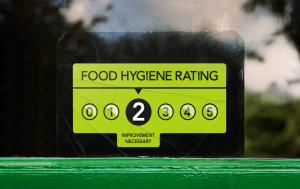
Why do allergen incidents happen at restaurants with good food hygiene ratings? A food hygiene rating only assesses controls around allergen cross-contamination as part of a wider inspection, at a single point in time. It doesn’t cover moment-to-moment behaviour under service pressure.
Can a restaurant ever eliminate allergen risk completely? No. The realistic aim is minimising and catching error, not eliminating risk, because human error can’t be fully designed out of a live kitchen environment.
Who is legally liable when an allergen mistake happens, the business or the individual? Liability can sit with individuals as well as the business, depending on the circumstances of the incident.
Does staff turnover really affect allergen safety? Yes. The Chartered Institute of Personnel and Development (CIPD) data puts UK hospitality turnover at around 52%, and that constant churn dilutes the situational awareness experienced staff build up over time.
What is “autopilot” behaviour in a kitchen? It’s performing a familiar task from habit rather than conscious attention, and it’s most likely to happen during repetitive, high-pressure service.
Does blaming staff for mistakes make restaurants safer? No. It discourages near-miss reporting, which removes the early-warning signal leadership needs to catch a bigger problem before it happens.
Food Alert helps hospitality businesses move beyond compliant paperwork to validated, culture-led allergen management.
Our Alert65 food safety management software brings HACCP management, risk assessments, incident and near-miss reporting, and the allergen matrix into one system, so a lapse on the pass gets logged and acted on rather than lost at the end of a busy shift.
Alongside the software, our Allergen Management Assessments give you an independent, expert-led view of where your controls stand today, across management systems, front and back of house practice, supplier data and training, with a full written report and clear priorities for action.
Get in touch today to discover how we can support allergen management in your business.