Updated on October 16, 2026
Health & Safety
12 min read
How to prevent Listeria infections in healthcare settings

Listeria monocytogenes poses a distinct challenge compared to other foodborne pathogens, because it can survive and thrive in fridges, making chilled ready-to-eat foods like pre-packed sandwiches and salads an ongoing risk.
However, protecting those in your care doesn’t mean starting from scratch. When you embed practical daily controls and clear governance into your routines, keeping every meal safe becomes second nature.
In this guide, we break down how to prevent Listeria infections across healthcare facilities, exploring the NHS governance standards alongside practical operational strategies for your frontline teams.
In Summary
What is Listeria?
Listeria monocytogenes is a foodborne bacterium that can survive at normal fridge temperatures of 0-8°C. Its rate of multiplication at 5-8°C is double compared to 0-5°C, making 5°C the max temperature for chilled, high-risk foods.
Who is most at risk?
Anyone with a weakened immune system, elderly patients, pregnant women, and newborn babies.
How Listeria spreads
Cross-contamination, temperature shifts during transport, poor cleaning, and pooling water. High-risk chilled foods like pre-packed sandwiches, sliced meats, and prepared salads are most at risk.
Key control measures
Keeping fridges strictly below 5°C, capping the shelf life of chilled sandwiches at 48 hours, running swab tests, and auditing suppliers.
Key legal standards
NHS England National Standards for Healthcare Food and Drink 2022
What is Listeria?
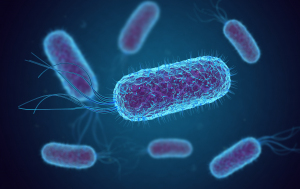
Listeria monocytogenes is a naturally occurring bacterium that lives in soil, water, and vegetation. , it can easily enter food supply chains through contaminated raw ingredients or unwashed produce, then spread quickly within food processing plants.
Only a small amount of Listeria monocytogenes needs to be consumed to cause a disease called Listeriosis. For healthy people, , but it can be extremely serious for people with weakened immune systems.
What makes Listeria different to other pathogens
Once Listeria enters a kitchen or food prep area, it’s extremely resilient — it can even survive temperatures below 0°C. Most bacteria slow down when chilled below 8°C; however, Listeria can survive and actively grow at standard fridge temperatures between 0-5°C.
More importantly, Listeria’s rate of multiplication doubles between 5-8°C, compared to 0-5°C. This rapid acceleration in growth is why Food Standards Agency (FSA) for healthcare settings sets 5°C as the absolute maximum temperature for foods that are at a high-risk of Listeria monocytogenes.
This means that Listeria can continue to thrive on chilled ready-to-eat foods that don’t rely on high-temperature cooking to kill bacteria. This unique characteristic means that even minor temperature drifts can cause risks:
- Growth in cold storage — Unlike Salmonella or coli, Listeria continues to multiply inside chilled storage units.
- Risk during transit – Chilled, ready-to-eat (RTE) foods transported across large sites or stored in ward kitchens are especially vulnerable if the cold chain is disrupted.
- Biofilm formation – Listeria can form persistent biofilms on food preparation surfaces, drains, and fridge seals. This means the can be resistant to some disinfectants and difficult to remove with standard cleaning procedures.
Who is most vulnerable to Listeriosis?
Listeriosis is a disease caused by the bacterium Listeria monocytogenes.
For healthy adults, mild exposure to Listeria might cause nothing more than a temporary upset stomach.
However, the Food Standards Agency (FSA) explains in its guidance on Reducing the Risk of Vulnerable Groups Contracting Listeriosis that, while rare, vulnerable groups face a much bigger risk of severe illness from Listeriosis. This includes:
- Elderly individuals
- Hospital inpatients
- People with weakened immune systems
- Individuals undergoing clinical treatment
- Pregnant women and neonates
High-risk foods often associated with listeriosis outbreaks
Listeria is often found in raw food of plant and animal origin, meaning that cases of listeriosis can be due to contaminated chilled RTE foods or cooked foods that have been exposed after cooking.
Some key examples of high-risk foods that have been linked to outbreaks are:
- Fish — Smoked fish and cooked shellfish
- Meat — Cooked and cured meats, and
- Pasteurised/unpasteurised cheeses — Soft blue-veined cheeses, mould-ripened soft cheeses
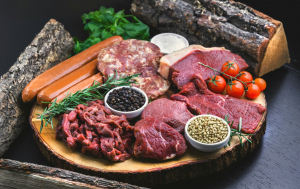
- Prepared chilled foods — Pre-packaged sandwiches, prepared salads, and certain pre-cut fruits like melon
What guidance is there for preventing listeriosis outbreaks?
Following a listeriosis outbreak in England in 2019, where seven patients from hospitals across the country tragically died after eating sandwiches contaminated with Listeria monocytogenes, the government-commissioned Report of the Independent Review into NHS Hospital Food was published in 2020. It highlighted key recommendations to overhaul food standards in in England.
Following this, the FSA’s Listeriosis Guidance was incorporated into a new national standard published by NHS England in 2022, titled National Standards for Healthcare Food and Drink.
The National Standards for Healthcare Food and Drink outline eight overarching standards. Each standard is underpinned by more detailed requirements that every NHS organisation must meet:
- Have a designated Board Director responsible for food safety and report on compliance with the Healthcare Food and Drink Standards at board level.
- Have a food and drink strategy.
- Consider input from a named food service dietitian to make sure choices are appropriate.
- Nominate a qualified food safety specialist, also called an ‘Authorised Person’.
- Invest in a skilled workforce, improved staffing, and recognise the complex knowledge required by chefs and food service teams.
- Show that they have a clear training matrix and a learning and development programme for all staff involved in healthcare food and drink services.
- Monitor, manage, and actively reduce their food waste.
- Prove that they have suitable, round-the-clock food service tailored to their patients’ demographics.
H2: How to prevent Listeria infections in healthcare settings
Preventing Listeria monocytogenes calls for embedding daily habits across every stage of your food service.
Here are four vital strategies to help your team maintain safety protocols and protect those in your care. We’ve also included advice from Annabel Kyle, Technical Director at Food Alert and subject matter expert on listeriosis in healthcare, having contributed to the drafting of the FSA’s Listeria guidance.
1. Audit your food suppliers and verify product specifications
Foods like , prepared salads, and cooked sliced meats are convenient for healthcare catering, but they carry higher risks if supplier controls slip.
Under Regulation (EC) No 852/2004 and the Food Safety and Hygiene (England) Regulations 2013, organisations must implement food safety management systems based on HACCP principles — and this extends to their supply chains, too.
Section 4.2 of the Food Standards Agency (FSA) Listeriosis guidance states that healthcare and social care organisations must have a clear procurement policy for chilled RTE foods. It should set explicit minimum food safety criteria that suppliers must meet before being contracted, to reduce the risk of buying ingredients that may already be contaminated with Listeria.
Anyone within a healthcare setting who is responsible for purchasing food for vulnerable groups has to actively integrate these conditions into procurement decisions.
Supplier assurance also depends on full ingredient traceability and multi-stage supply chain auditing. Healthcare providers must keep accurate, easily accessible records for every batch of food received — including supplier details, delivery times, temperatures, and batch numbers — so that any item can be traced back to its origin immediately during a recall.
In summary, here’s a key list of procurement and supplier controls
- Use a reputable supplier that meets your food safety criteria.
- Extend supplier audits to evaluate manufacturers, logistics providers, and third-party caterers or retailers.
- Establish clear product specifications with suppliers, including documented evidence of HACCP procedures.
- Enforce strict shelf-life limits within your product specifications.
- Keep complete traceability logs for all the ingredients you receive.
- On delivery, check that chilled and frozen food arrives below 5°C, and that the packaging is intact.
Annabel advises:
“When sourcing chilled foods at high-risk of Listeria for those in your care, the FSA’s Listeriosis guidance expects healthcare organisations to set clear minimum food safety criteria and demands complete traceability.
Auditing your suppliers and verifying product specifications falls under standard four of the National Standards for Healthcare Food and Drink, which mandates that organisations nominate a qualified food safety specialist or Authorised Person. Your food safety specialist provides the technical expertise needed during procurement to evaluate supplier HACCP systems, scrutinise micro-testing data, and verify ingredient traceability long before food ever reaches your hospital kitchens.”
2. Maintain continuous cold chains and stop ward-level temperature drift
In accordance with HACCP principles, food businesses must establish Critical Control Points (CCPs) and critical limits to keep hazards at safe levels.
It’s worth noting that cold chain breakdowns rarely occur in central prep kitchens. Instead, temperature drift usually happens during trolley distribution across large facilities or inside ward kitchens where satellite fridges are opened repeatedly throughout busy shifts.
Annabel says:
“Maintaining cold chain integrity across ward kitchens links directly to standards five and six of the Healthcare Food and Drink Standards, which call for investing in a skilled workforce and establishing a clear training matrix for all staff involved in food and drink services.
Ward hosts and care staff should complete regular training to understand that checking a ward fridge isn’t just a daily admin chore; it’s a clinical safeguard that keeps food safe for those in their care.”
3. Eliminate biofilms through deep cleaning and environmental swabbing
Using high-pressure power washing equipment on contaminated drains can also spread Listeria bacteria onto nearby surfaces, while leaving the biofilm intact.
To manage this risk safely, kitchens preparing food for vulnerable groups must use specialist sanitisers and disinfectants proven to break down Listeria. In line with the HACCP verification principle, combining targeted deep-cleaning schedules with routine environmental swab testing gives your team hard, scientific proof that sanitation methods are physically destroying bacteria rather than displacing them.
Annabel comments:
“Establishing sampling protocols connects directly to standard four and standard five, meaning that your nominated food safety specialist works alongside well-trained kitchen teams to maintain hygiene standards.
Visual cleanliness can be deceptive because Listeria biofilms hide in microscopic crevices, but routine swabbing provides proof that your sanitation routines are physically removing bacteria.”
4. Track incidents and escalate issues to board level
Keeping accurate, accessible documentation is essential for proving due diligence during Environmental Health Officer (EHO) inspections.
Replacing paper logs with digital trails can make it easier when inspections roll around, but it also gives your nominated Authorised Person and designated Board Director transparent data across every ward kitchen and site during standing board agenda items. It means near-misses, temperature breaches, and fridge failures are systematically logged, tracked, and escalated.
Plus, when temperature checks or equipment failures are logged digitally, it makes it easier for catering managers and facilities teams to implement corrective measures before Listeria can multiply.
Annabel says:
“When ward fridges drift, or near-misses happen, paper logs can’t deliver the real-time visibility executive teams need. Digital platforms mean that issues are flagged, resolved, and documented instantly, giving leadership confidence in their governance and a strong due diligence defence, while protecting those in your care.” [
How Food Alert supports healthcare settings
Navigating complex healthcare standards and Board-level reporting doesn’t have to feel overwhelming.
Food Alert provides tailored food safety consultancy, digital technology, and hands-on expertise to help NHS Trusts, hospices, and care facilities.
To help your organisation build a robust food safety system, we offer dedicated support across every operational layer:
- Healthcare gap analysis — We evaluate your current catering, ward kitchen, and supply chain operations against the Food Standards Agency’s Listeria guidance and the National Standards for Healthcare Food and Drink.
- NHS Authorised Person representation — We can act as your nominated Authorised Person, reviewing your Food Safety Management System and also providing representation at board meetings.
- Hospital-specific audits and environmental sampling — Conducting targeted audits and sampling testing to verify the absence of Listeria risks on preparation surfaces, equipment, and high-risk foods.
- Digital compliance with Alert65 — Streamlining temperature logging, ward checklists, and risk assessments through our food safety management software Alert65.
- Listeria awareness training — Upskilling catering teams and care staff through specialist e-learning and face-to-face training courses tailored to healthcare environments. Learn more about our Listeria Awareness Training for Healthcare Professionals.
- Supplier technical auditing — Conducting supplier audits to verify that external sandwich, salad, and meal manufacturers operate rigorous HACCP controls and shelf-life verification.
Discover all the ways we support healthcare providers here.
Frequently asked questions
At what temperature does Listeria stop growing in healthcare settings?
Listeria monocytogenes can survive and actively multiply at temperatures as low as -2°C. While statutory food hygiene regulations allow chilled storage up to 8°C, FSA guidance and healthcare standards require keeping high-risk foods associated with Listeria monocytogenes in chilled storage strictly below 5°C to slow bacterial growth.
What is the role of an Authorised Person in NHS food safety compliance?
An Authorised Person is a nominated food safety specialist who provides technical advice, reviews safety management systems, and represents food safety standards during board meetings.
Essentially, they’re responsible for food safety compliance within an NHS organisation and must make sure that the healthcare setting meets the legal requirements set out in the National Standards for Healthcare Food and Drink.
How long can pre-packaged sandwiches be stored in care facilities?
Under FSA guidance for high-risk groups, chilled ready-to-eat foods like pre-prepared sandwiches and salads should have a maximum shelf life of 48 hours from production to consumption.
Protecting those in your care from foodborne pathogens starts with setting clear daily habits, comprehensive supplier oversight, and transparent governance.
Find out how our Food Alert team supports healthcare organisations, or request a demo of our Alert65 food safety compliance software today.