Updated on August 3, 2026
Food Safety
10 min read
What is HACCP? A guide for food businesses

Whether you run a bustling restaurant, a multisite hotel group, or a local care home, a comprehensive food safety strategy is the backbone of your success.
That’s why Hazard Analysis and Critical Control Point (HACCP) is your most powerful tool for keeping people safe and your business thriving.
This guide breaks down everything you need to know about HACCP, including what it stands for, the seven HACCP principles, and how to keep your business compliant.
Key summary
If you’re looking for the fundamentals around HACCP, here’s what you need to know:
- HACCP stands for Hazard Analysis and Critical Control Point and is a mandatory framework for identifying, evaluating, and controlling food safety hazards.
- UK law requires food businesses to have a plan in place based on HACCP principles to keep customers safe and stay compliant.
- Seven core HACCP principles form the foundation of any effective food safety management system.
- HACCP is enforced by local authorities via Environmental Health Officers (EHOs) and overseen by the Food Standards Agency (FSA).
What is HACCP?
In the food safety industry, HACCP stands for Hazard Analysis and Critical Control Point. Put simply, it’s a framework that prevents hazards in food production.
The system was first introduced in the 1960s for NASA to create a safe, pathogen-free food for astronauts.
Following endorsement by the World Health Organisation, in January 2006, HACCP was written into EU legislation under Regulation (EC) No 852/2004, making it a legal requirement across the European Union. Later, the Food Safety and Hygiene (England) Regulations 2013 (with separate regulations for Scotland, Wales, and Northern Ireland) made it mandatory for food businesses to create and maintain hazard-prevention procedures based on the seven HACCP principles.
Today, it’s an internationally recognised programme that’s widely known as the gold standard for food safety.
Why do we use HACCP?
Rather than just inspecting a finished dish and hoping for the best, HACCP focuses on identifying potential problems before they happen. It’s about looking at every step of your process, from receiving ingredients from your suppliers to serving the final plate, and making sure you have controls in place at the points where things are most likely to go wrong.
Having a HACCP plan isn’t just good practice; it’s a legal requirement and provides a clear, logical structure that helps you protect your customers, your reputation and your business.
Here are some other key reasons why HACCP is essential for your business:
- It prevents foodborne illness — By identifying risks like harmful bacteria, viruses, or allergens early on, you can stop them from ever reaching your customers.
- It protects your reputation — A single food safety incident can have devastating consequences. A robust plan shows your customers and the authorities that you take their safety seriously.
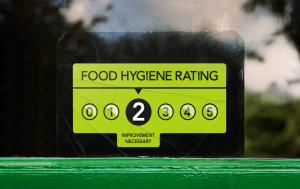
- It boosts your food hygiene rating — Local authorities look for a working HACCP system during inspections. Having one in place is the best way to aim for a 5-star rating. Learn more about Food Hygiene Ratings with our guide.
- It creates a defence — If an incident does occur, having a documented system and accurate records proves you’ve done everything reasonable to keep food safe.
- It boosts efficiency and reduces waste — By setting clear standards for things like storage and cooking temperatures, you reduce the risk of stock being ruined, spoiled, or thrown away.
- It empowers your team — Clear, logical procedures make it easier for your staff to follow the rules and feel confident in their work, especially during a busy service.
The 7 HACCP principles
The HACCP framework is built on seven core principles that guide you through identifying risks and setting up a system to manage them. By following these steps, you can make sure your kitchen remains a safe environment for both your team and your customers.
1. Conduct a hazard analysis
The first step is to look at your entire food process and identify any potential hazards, which are anything that could make food unsafe to eat. The FSA highlights three types of hazards:
- Microbiological — Involving harmful bacteria, like Salmonella.
- Chemical — Involving chemical contamination, like toxic cleaning chemicals.
- Physical — Involving physical items contaminating food, like fruit pips or hair.
Think about what could go wrong at each stage, from the moment ingredients arrive at your back door to when the final dish is served.
2. Determine critical control points (CCPS)
Once you know the hazards, you need to identify the critical control points. These are the specific stages in your process where you must apply a control to prevent, eliminate, or reduce a hazard to a safe level.
A common example is the cooking process, where reaching a specific temperature is vital to kill harmful bacteria.
3. Establish critical limits
For every CCP, you need to set a critical limit. This is a maximum or minimum value, like a temperature, time, or pH level, that must be met to make sure the hazard is prevented, eliminated, or under control.
If a dish doesn’t reach its required cooking temperature, it hasn’t met the critical limit and isn’t safe for consumption.
4. Establish monitoring procedures
You need a clear way to check that your CCPs stay within their critical limits. This involves regular monitoring, like recording fridge temperatures or using a probe to check core cooking temperatures. It’s about having a watchful eye on the points that matter most.
As part of this principle, it’s important to consider:
- How you’ll monitor critical limits
- How often you’ll monitor them
- Who in your business is responsible for carrying out the procedures
5. Establish corrective actions
Even with the best plans in place, things can occasionally go wrong, which is why you need to decide in advance what you will do if a critical limit isn’t met. These are called corrective actions.
Whether it’s reheating a dish or disposing of stock that has been kept at the wrong temperature, having clear corrective actions helps your team act quickly and safely.
6. Establish verification procedures
This step is all about proving that your HACCP plan actually works. It involves regularly reviewing your records and procedures to make sure the system is being followed correctly and is effective at keeping food safe.
These verification procedures could include testing your critical control points, product testing, internal audits, recalibrating equipment, and reviewing your temperature logs and cleaning schedules.
7. Establish record-keeping
The final principle is about documentation and having evidence of all your hard work. Keeping accurate records of your hazard analysis, your CCPs, and your monitoring results makes life much easier if you’re asked to prove them.
Having a clear digital or paper trail is essential for showing due diligence and your commitment to food safety during an EHO inspection. Read more about how to prepare for your next EHO inspection here.
Download our free HACCP guide
Our team of experts have created a free HACCP guide that you can download here and share with your team. It's a handy resource to keep in the kitchen or use during staff training sessions to help everyone stay on the same page

How to build a HACCP plan
Starting your HACCP plan from scratch can feel like a mountain to climb, so it’s tempting to look for a one-size-fits-all template. However, every business handles food differently, so your plan needs to be unique to you.
A tailored HACCP plan doesn’t just keep you legal; it organises your workflow and gives you peace of mind that nothing is being left to chance.
To create a plan that actually works for your business, here are some key steps:
- Map out your processes — Walk through your current operations from start to finish. If you handle high-risk ingredients like raw shellfish or unpasteurised dairy, your plan will look very different from a business that only reheats pre-packaged food.
- Involve your team — Don’t write the plan in an office and hope for the best. Talk to the people on the floor to make sure the controls you’re putting in place are practical for their daily routine. Getting their contribution means involving their real experiences into your HACCP plan.
- Be specific with limits — Avoid vague instructions. Instead of saying ‘cook until hot’, specify the exact temperature needed to meet your critical limit.
- Keep it accessible — Make sure your plan is easy for staff to find and understand. If it’s tucked away in a dusty folder, it isn’t protecting anyone.
- Review and update — Treat your HACCP plan as a living document. You need to update it whenever you change a supplier, buy new equipment, make menu changes, or manage allergens.
If the process feels daunting, you don’t have to do it alone. At Food Alert, we provide comprehensive HACCP development support to help you build a system that fits your business perfectly.
HACCP certification and compliance costs
In the UK, there isn’t one single HACCP certificate that you’re legally required to hang on the wall. Instead, the law needs you to prove you have a working system based on HACCP principles.
Some businesses choose to put their team through formal training to get certified, which helps show due diligence to local authorities.
The cost of staying compliant varies depending on the size of your business and the level of support you need. You might want to consider:
- Food Safety training — Level 1 or Level 2 Food Safety training is essential for making sure your team understands their role in the HACCP process. For more specific guidance, HACCP Level 2 training gives business owners and teams insight into putting the seven principles into practice.
- Professional consultancy — HACCP development services usually involve having an expert review your plan to make sure there are no gaps.
- Digital compliance tools — Investing in digital tools that cover HACCP management, like our food safety compliance software, helps you move away from paper logs and save time.
Research from the Food Standards Agency (FSA) suggests that foodborne diseases cost around £9.1 billion every year to the NHS, the economy, and customers, with an estimated £157.5 million in disturbance costs to businesses. This covers everything from emergency cleaning and replacing wasted stock to staff absences.
Frequently asked questions
Which law introduced the need for HACCP?
In the UK, the requirement for food businesses to have a food safety management system based on HACCP principles is set out in Regulation (EC) No 852/2004. It states that, ‘Food business operators shall put in place, implement and maintain a permanent procedure or procedures based on the HACCP principles’.
This is upheld and enforced across the UK by specific regional regulations:
- In England — The Food Safety and Hygiene (England) Regulations 2013.
- In Scotland — The Food Hygiene (Scotland) Regulations 2006.
- In Wales — The Food Hygiene (Wales) Regulations 2006.
- In Northern Ireland — The Food Hygiene Regulations (Northern Ireland) 2006.
All of these regulations sit under the Food Safety Act 1990, which is the main food safety legislation in Great Britain.
How many steps are in the HACCP system?
There are seven core principles in the HACCP system:
- Hazard analysis
- Determine the Critical Control Points (CCPs)
- Establish critical limits
- Implement a monitoring system for each CCP
- Establish corrective actions to be taken when a CCP is breached
- Establish verification procedures to make sure the HACCP is working effectively
- Establish records and documentation
These steps guide you from identifying potential hazards all the way to establishing a thorough record-keeping system.
What does HACCP stand for in food safety?
HACCP stands for Hazard Analysis and Critical Control Point. It’s an internationally recognised framework designed to prevent food safety incidents by identifying and controlling risks.
When should a HACCP plan be checked?
You should check your HACCP plan at least once a year and review it whenever you make significant changes to your business. This includes changing suppliers, introducing new equipment, or updating your menu.
Want help building your HACCP system? Get in touch with our experts today and see how our award-winning food software can boost your HACCP management.