Updated on September 29, 2026
Food Safety
10 min read
How to maintain food safety consistency as your business grows

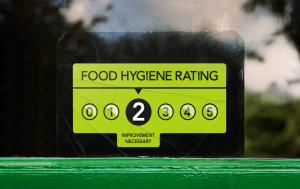
You open your first site, and it runs like clockwork. Then you expand to your tenth location and notice something: your first site secures an easy 5-star rating, while location ten struggles to stay compliant despite following the same safety practices.
42% of teams named consistency as their biggest challenge for conducting daily safety checks, followed by 33% who struggled to spot recurring issues across sites.
That’s why we’re sharing our top advice for maintaining food safety compliance across different venues. With expert insights from Annabel Kyle, our Technical Director, we’ll explore core strategies for meeting hygiene regulations as your business grows.
Key summary
| What’s the biggest challenge food businesses face with daily safety checks? | 42% keeping records
33% identifying recurring issues 25% finding the time every day* |
| Top strategies for scaling food safety | Embedding daily habits into kitchen routines, fostering a positive safety culture, being EHO inspection ready, and staying up to date with changing legislation. |
| Recommended tools for scaling food safety | An all-in-one food safety management software and a digital checklist app |
*Data based on a LinkedIn poll of 12 respondents
1. Build better communication between the Head Office and the kitchens
Head Office dashboards often tell a story of perfect compliance, displaying clean rows of green tick marks and fully completed logs. However, a dangerous operational disconnect can emerge when the data on your screen doesn’t match the reality of the kitchen floor.
When multi-site businesses treat digital food safety software as a simple box-ticking exercise, data becomes a false safety net.
As you expand your business, this communication gap naturally widens. So, if front-of-house and kitchen staff feel disconnected from the reason behind these checks, compliance drift can set in. This can then lead to daily tasks being treated as admin chores rather than as measures to strengthen safety.
How businesses should respond:
To build uniform standards across all sites, your teams need to understand the purpose behind every tap on the screen. True compliance can’t be achieved by dictating rules from a distant boardroom; it calls for turning passive monitoring into active accountability.
Annabel says:
“A digital record is only as reliable as the human action behind it. When you foster a positive safety culture where teams understand how their actions protect lives, they take genuine ownership of daily standards and are more likely to log data accurately. That consistent reliability allows a strong due diligence defence and can help flag and fix operational issues more quickly.
Encouraging this as part of a business’s culture is essential, and regular training can be an effective way to build that accountability.”
2. Create a positive culture in your organisation
True food safety happens when no one is watching. While filing cabinets are useful for archiving records, food safety software actively shapes daily habits in the kitchen. Creating a strong and resilient safety culture across a growing organisation means choosing tools that reduce friction for staff and fit naturally into their fast-paced shifts.
If safety checks feel overly complex or time-consuming, busy teams under pressure could be tempted to take shortcuts. This directly reflects our poll findings: 25% of operational teams say finding time every day is their primary barrier to daily safety checks.
How businesses should respond:
To counteract this, introduce workflows that encourage active engagement rather than passive ticking exercises. When digital software is designed around the real movements of a kitchen or floor team, compliance stops feeling like an additional task and becomes the way things are done.
True food safety happens when no one is watching. While filing cabinets are useful for archiving records, food safety software actively shapes daily habits in the kitchen. Creating a strong and resilient safety culture across a growing organisation means choosing tools that reduce friction for staff and fit naturally into their fast-paced shifts.
If safety checks feel overly complex or time-consuming, busy teams under pressure could be tempted to take shortcuts. This directly reflects our poll findings: 25% of operational teams say finding time every day is their primary barrier to daily safety checks.
How businesses should respond:
To counteract this, introduce workflows that encourage active engagement rather than passive ticking exercises. When digital software is designed around the real movements of a kitchen or floor team, compliance stops feeling like an additional task and becomes the way things are done.
Annabel adds:
“It’s also important to shift the operational narrative away from policing and fear mongering. Use the data from your software to identify, praise, and reward the specific venues and teams maintaining exceptional compliance records, turning food safety into a genuine source of team pride.”
With our checklist software, you’ll get real performance insights and can track open and completed tasks as they happen, across all your sites and down to the user.
3. Get every site ready for an unannounced inspection
The real test of your multi-site standards happens when an Environmental Health Officer (EHO) walks through the door without warning. If your sites scramble to clean, organise, and update logs when an audit is looming, you’re exposing your brand to major regulatory and operational risks. Not only that, you could be facing an average cost of £219.95 per food hygiene re-rating.
True consistency means moving away from reactive action and embedding inspection readiness into your everyday habits. However, reaching this state of constant readiness across multiple locations takes preparation and trust that daily duties are being completed in real time.
How businesses should respond:
Shift your focus from periodic auditing to continuous, daily execution. Use food safety management software, like Alert65, to run your day-to-day operations with tools for high-priority hygiene tasks, risk assessment templates, temperature checks, and more.
Annabel explains:
“When compliance is seamlessly woven into the opening and closing routines of every location, each site should remain permanently inspection-ready, shielding your business and your bottom line. Standardising your processes with structured and documented guidance means every site manager knows exactly what is expected of them each day and also when the EHO comes calling.”
Find out how to prepare for your next EHO inspection with our complete guide.
4. Implement allergen control at scale
Managing allergens within a single venue requires careful attention, but applying those exact same standards across an entire group adds a massive layer of complexity. A single ingredient substitution at a local supplier or a miscommunicated recipe update on the floor can instantly compromise guest safety and violate strict UK labelling laws.
For example, under Natasha’s Law, any food item prepared and packed on-site before a customer orders it must clearly display a full ingredients list with allergens emphasised in bold. If one of your locations switches from one brand of mayonnaise to another because of a supply shortage, and that change contains a different allergen profile, labels must reflect that instantly.
Need help labelling? We do that too. Learn about our food labelling and pack copy compliance service.
How businesses should respond:
Forget about manual paper logs and loose kitchen printouts that quickly become outdated. Consistency in this area needs a single, central source of truth where menu updates, ingredient data, and prep protocols sync instantly across every digital device in your organisation. It helps your kitchens safely execute complex menu requirements at scale.
Annabel highlights the critical nature of allergen management across multiple sites:
“Using food safety software to manage allergens digitally can be a useful tool for reducing risks, particularly in relation to allergen information, but it isn’t the only safety pillar you need to be investing in. Technology can help to scale your menu updates consistently, but it should work alongside tried-and-tested kitchen workflows and regular staff training to give your teams total confidence to manage allergens safely and consistently every single day.”
5. Stay ahead of evolving food safety regulations
UK food safety regulations are constantly changing to protect customers from emerging threats. So, relying on site managers to independently track legal updates is risky; a change in compliance standards must be deployed across all locations simultaneously to avoid dangerous legal gaps.
Take, for example, the changes to food and drink classified as High in Fat, Sugar or Salt (HFSS). Updates to how HFSS items are marketed now mean that qualifying restricted items are no longer allowed to be displayed within two metres of a till or designated queuing area, aisle ends, or store entrances (if a business has more than 50 employees and is larger than 2,000 square feet).
If all your sites aren’t aware of these updates, your business could be at risk of immediate enforcement action from the Advertising Standards Authority (ASA). You can read more about adapting to these changes in our guide to navigating the HFSS advertising restrictions.
How businesses should respond:
Partnering with experts who provide food specification support for future legislative updates makes legal compliance simple, whether you run 10 sites or 50. Plus, it takes one thing off your plate, so you can focus on keeping your sites running smoothly and your customers happy.
Annabel adds:
“Food safety legislation doesn’t stand still, and your multi-site operations can’t afford to either. True consistency requires support that instantly pushes regulatory updates to the frontline. When a law changes, updates need to be processed by management, shared with wider teams, and care taken to check that everyone understands what these new changes mean.”
6. Protect your reputation across the whole chain
The ultimate goal of scaling your operation is to deliver exceptional service that customers can expect every time they visit. But when you operate across more than one site, your brand reputation is only as strong as your weakest venue.
A single poor food hygiene rating at an underperforming branch doesn’t just hurt that specific site; it can damage your entire group’s reputation and erode public trust in an instant.
Research from the Food Standards Agency found that over one in three (36%) consider a restaurant’s food hygiene rating when deciding where to eat out — and the FSA actively encourages diners to ‘look before they book’ to understand the hygiene levels of where they choose to eat.
Regularly hitting top marks across all of your sites is the ultimate benchmark of success, proving that your safety systems are working exactly as intended. Read our ultimate guide to food hygiene ratings to learn more about how to achieve the best score.
How businesses should respond:
Protecting your brand across the whole chain comes down to having the right systems in place to stay prepared and making sure your team follows the correct protocols. When every location is supported with the right tools, achieving a top score becomes an easy win for your business.
Annabel sums this up:
“Maintaining a flawless reputation across a growing multi-site operation is one of the biggest achievements for any hospitality business. And it comes down to visibility and cultural alignment. You can’t physically be in ten or twenty kitchens at once, but your compliance standards can be.
By using food compliance software to track real-time performance and risks and to support your teams, you make sure that your brand values are upheld at every level. You’re protecting your business, your staff, and your customers every single day.”
Scale with confidence with Food Alert
Scaling your business is an exciting milestone, and safety compliance should support your ambition, rather than hold it back.
By focusing on meaningful on-site behaviour, reducing daily admin friction, and supporting your teams with bespoke digital checklists, you can uphold seamless consistency across every chain.
Turn food safety into a practice that helps you meet compliance standards and customer success. With Alert65, you can do just that.