Updated on June 19, 2026
Business update
13 min read
The rise of AI food fraud: How to protect your business

While AI has been making headlines for speeding up operations, it’s also creating a new problem for food businesses in the form of AI food fraud. This type of fraud involves customers using image editing tools to doctor food items to make them look undercooked, spoiled — or worse. It’s becoming more and more popular as it’s a way for people to try to get refunds or ‘free’ meals.
With over 34 million AI-generated images produced daily and 71% of social media content now estimated to be AI-generated, can your food business afford the cost of AI food fraud?
Today, we’re diving into how AI is being used to compromise food integrity and the risks it poses to your business. With insights from our technical and advisory experts, we’ll explain how you can stay one step ahead.
The rise of AI food fraud
AI refund fraud involves customers using AI to alter photos of their meals, adding realistic textures of mould, ‘undercooked’ meat, or even foreign objects, to demand immediate compensation or a refund from delivery platforms and restaurants.
Our advisory team is already seeing this in live cases across the UK; it’s no longer a theoretical risk, but a daily reality for busy hospitality teams.
This trend is especially concerning given how some third-party delivery platforms currently operate. To maintain high levels of customer service at scale, these platforms often rely on automated systems to resolve disputes quickly. When a fraudulent complaint is submitted, it’s usually the case that they automatically process the refund, which is then passed on to the food business. This puts the financial burden directly on business owners and leaves you to pick up the tab when rising food costs and soaring energy prices are already squeezing margins.
You might think that an altered image would be easy to catch, but a study by arXiv found that only 38% of AI image generators use adequate watermarking, and only 18% follow proper deepfake labelling. Even these safety markers can be stripped away, making it nearly impossible for your staff to spot a genuine issue from a digital fabrication.
Until tighter regulations arrive, your business remains on the frontline against a threat that is becoming more difficult to manage without specialist expertise.
How AI is being used against food businesses
Annabel Kyle, Technical Director at Food Alert, and Alasdair Dean, AI Lead at Food Alert, have identified two key ways that AI is being used to target food businesses.
1. Image manipulation
The biggest threat comes from completely fabricated or altered photographic evidence. People are creating realistic images of spoiled food or items with things like glass or hair in them, when they were never there in the first place.
Alasdair notes:
“There have been instances where we’ve seen AI manipulation of images relating to foreign bodies or undercooked food complaints. We do think this is likely to increase, and we are aware that third-party aggregators reportedly receive a lot of suspicious complaints of this nature.”
Sometimes a trained eye can still identify these fakes, but it’s becoming much harder as AI technology produces more sophisticated results. As the arXiv research highlights, until mandatory watermarking and labelling become law, spotting fakes will remain challenging to the untrained eye.
2. AI-written intimidation
The second trend our experts are seeing is the use of AI to write threatening, legally framed complaints. These emails are designed to sound authoritative and intimidating, pressuring you into issuing a refund to avoid an implied legal battle.
“A bigger trend for us is the use of AI to intimidate us and our food business clients in relation to food complaints,” says Annabel.
“For example, if a guest disagrees with the outcome of their complaint, we will often receive an email that is clearly written with AI, quoting legislation and stating they will be reporting the matter to enforcement authorities, government agencies, legal representatives, and so on.”
For an experienced adviser, an AI-crafted complaint doesn’t change the facts of an investigation.
However, for less-experienced business owners or anyone who isn’t a food safety legislation expert, it can be incredibly stressful. These tactics can mean complaints take longer to resolve and increase the chances that it’ll be escalated to a local authority Environmental Health Officer (EHO).
What are the impacts of AI food fraud for businesses?
Here are the three main areas where AI food fraud can cause the most damage:
1. Increased local authority inspections
When a complaint is brought to an EHO, it can trigger a formal inspection — regardless of whether the initial claim is legitimate.
Annabel explains:
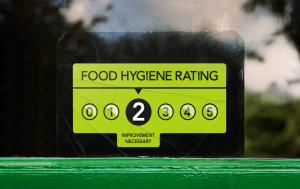
“Fraudulent complaints escalated to local authority EHO departments, whether through AI-generated images or intimidatory written correspondence, can trigger inspections. Even where the original complaint is fabricated, an inspection may uncover unrelated issues, creating real regulatory exposure. Repeated complaints on record can also, over time, affect a business’s food hygiene rating.”
The cost of recovering from a dip in your rating is another unexpected hurdle that your business could face. Our own research found that 84% of local councils across England, Wales and Northern Ireland charge businesses for a food hygiene re-rating, with the average cost totalling £219.95.
2. Reputational damage
“AI-generated reviews or complaints that incorporate legal language and legislative references can appear more credible to readers, lending undeserved legitimacy to fraudulent claims and causing reputational damage. In an age where online reputation directly influences consumer trust, this is a meaningful risk,” says Alasdair.
Your online reputation is often the first thing a potential customer sees.
When AI-generated complaints or reviews are posted publicly, they can quickly chip away at the trust you’ve worked hard to build. Since these tools can mimic professional or legal language, they can look a lot more credible than a standard complaint. For consumers, research reveals that up to 87% find it difficult to spot genuine reviews from fake AI-generated feedback.
3. Time and financial cost
The most immediate impact for businesses is often felt on the balance sheet. Even though the loss of a single refund is frustrating, the cumulative cost of defending your business is much higher.
“Beyond direct refund losses passed on by delivery platforms, businesses face the cost of time spent investigating and defending fraudulent claims, including, in more serious cases, civil proceedings,” says Annabel.
Managing these claims takes your focus away from what matters most, which is running your business and serving your genuine customers.
How hard is it to spot a fraudulent complaint?
Staying ahead of these complaints calls for a careful balance of scepticism and diligence. How easy it is to spot fraudulent complaints can depend on whether you’re looking at an email or a photograph.
Alasdair explains:
“At the moment, email and written complaints are relatively easy to identify as AI language is currently fairly easy to distinguish. However, this is likely to change over time. Images are harder to spot, as while there are clues to look for, they are trickier to see. Again, these will become harder and harder to identify over time, and relatively rapidly.”
While it can be tempting to dismiss a suspicious-looking email or photo, doing so without a thorough investigation carries its own significant risks. The challenge for any food business is making sure that in the process of catching a fraudster, you don’t accidentally ignore a customer with a genuine problem.
Alasdair says:
“If you reject a genuine complaint on the suspicion of AI manipulation, you could miss any real issues being investigated, along with identifying any real risks within your systems and operations. This could leave your business exposed to enforcement action and reputational and financial risk.”
This is why a due diligence approach remains your best defence. By treating every complaint with the same professionalism, while being mindful of these new digital red flags, you can protect your business from fraud without compromising your commitment to food safety and customer service.
What does the law currently say?
Since AI was first rolled out to the public, it’s continued to evolve at pace, but legal frameworks are still catching up. You might assume that food safety laws automatically protect you from this type of digital deception, but the reality is quite different.
The current legal landscape in the UK wasn’t designed with AI-generated threats in mind, so it doesn’t actually cover this type of fraudulent behaviour.
"Food fraud in the UK is defined as the deliberate and intentional substitution, addition, tampering or misrepresentation of food, ingredients or packaging for financial gain, with the intention of deceiving the business.
Legislation is about protecting the consumer and making sure that food businesses produce and place safe food on the market, so this type of activity is not currently covered by food safety legislation.
In the UK, there is currently nothing that governs the generation of images outside the intentional generation of sexually explicit images. This also means other people might see and hear of this type of fraud and the lack of legislation around it, and carry it out for themselves."
Annabel Kyle
Essentially, the legislation is supposed to protect both consumers and businesses, but there’s a gap in it that places the burden of identification and response almost entirely on you.
Without a clear legal framework to lean on, challenging a fraudulent claim formally becomes much harder. It calls for a documented, expert-led response.
We asked Annabel if it’s likely that we’ll reach a point where photos are no longer trusted in complaint investigations:
“Potentially, yes. It is already at a stage where it could reasonably be considered dubious. Photographic evidence of foreign body complaints has, for a long time, been subject to question as it can be hard to confirm if that object originated from the food business or elsewhere.”
It’s becoming a situation where you can no longer simply believe what you’re seeing. The way food businesses handle complaints must shift.
As the law doesn’t yet provide a safety net for these digital tactics, the most effective way to protect your business from unfair penalties is to implement proactive preparation and a robust verification process.
What steps can food businesses take to protect themselves?
You don’t have to become a tech expert to protect your business. Instead, it’s about reinforcing the high standards and the rigorous due diligence that you already practice.
Here is how you can strengthen your defences and stay one step ahead:
1. Review your food safety management system
If you find yourself in a situation where a suspicious complaint has triggered an inspection, your paper trail is your best witness.
“Make sure that your controls are robust and followed consistently. A well-documented and well-maintained system is your strongest defence if a fraudulent claim ever leads to a regulatory visit,” says Annabel.
Our Alert65 food safety compliance software is an all-in-one safety compliance platform that helps you manage Food Safety and Health & Safety with confidence. From HACCP and risk assessments templates to daily checklists and allergen management, it does it all. Learn more about Alert65 here.
2. Implement clear investigation procedures
The best way to handle AI food fraud is to treat every complaint consistently and professionally. This makes sure you don’t accidentally ignore a genuine safety issue.
“You should have a structured, documented process for handling all complaints. It’s vital to take every report seriously so you don’t miss real risks within your operations. You don’t want to leave your business exposed to ‘enforcement action’ or financial loss simply because you were unsure if a complaint was real or not,” Annabel tells us.
Learn how our food safety consultants can advise on individual cases and provide full incident management with our food complaints service.
3. Analyse evidence carefully
You don’t need specialist software to spot most current fakes. If you know what to look for, a few minutes of careful observation can reveal inconsistencies.
“At the moment, our experience is that only a small number of those producing AI-generated imagery are truly skilled, so they are often fairly easy to spot. A short amount of time scrutinising the details of a photo or the language in an email is a very helpful first step,” advises Alasdair.
4. Engage with your delivery partners
As food delivery platforms often manage the initial refund, it’s important to stay vocal.
“If you use third-party aggregators, work closely with them to understand their specific fraud reporting and dispute processes. Being proactive with these partners can help you challenge ‘fraudulent’ refunds more effectively,” recommends Annabel.
5. Seek specialist support
You don’t have to face these new digital threats alone. Whether it’s a suspicious ‘undercooked’ item in a photo or a legally worded email, expert advice is available.
"Food Alert's advisory team is experienced in identifying AI-assisted complaints. We can provide expert guidance on how to handle specific disputes and make sure that your broader compliance picture remains watertight.
By staying alert and maintaining your high standards, you can protect your business’s reputation as a safe and trusted part of the community."
Alisdair Dean
The bottom line on AI food fraud
Unfortunately, the consensus among our experts is that AI food fraud is likely to keep growing over the next few years. The accessibility of AI tools and cost-of-living pressures mean that more and more people may seek fraudulent refunds.
However, this doesn’t mean your business has to be vulnerable. By knowing what you’re up against and being prepared, you’ll be better placed to respond. Staying informed and proactive is your best strategy for making sure that technology remains a tool for your success, rather than a loophole for fraud.
How Food Alert can help
Tackling AI food fraud can feel overwhelming, but you don’t have to do it alone. When the legal framework is still catching up and images can no longer be taken at face value, having a partner by your side makes all the difference.
At Food Alert, our technical and advisory teams are already equipped to support you with AI fraud complaints.
Here are the ways that our experts can help:
Contact us today to get started.